

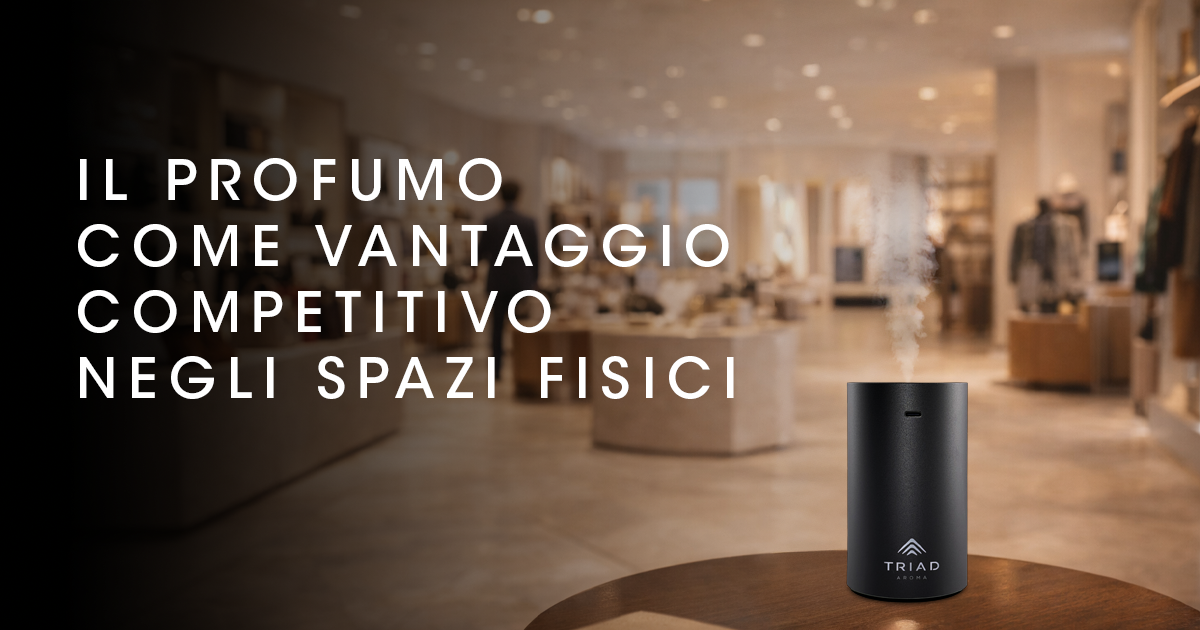
Scent as a competitive advantage in physical spaces
The difference between a space that impresses and a space that lingers is often invisible.
In my work, I encounter companies that have invested in high-impact architecture, sophisticated concepts, and visual identities curated down to the last detail. Impeccable, coherent spaces designed with care.
And yet, when we stop to reflect on what really remains in the memory of those who experience them, the answer is not always about what was seen.
It is about what was perceived.
In a market where environments look increasingly similar and aesthetics have become a prerequisite, the real competition is played on a deeper level: sensory experience.
And it is on this level that scent takes on a strategic value.
Where competitive advantage is born today
Physical spaces no longer compete only with each other. They compete with digital, with speed, and with the possibility of doing without the physical experience.
For this reason, when a customer decides to enter a space—a hotel, a boutique, a showroom, an office—they expect something that goes beyond functionality.
They expect coherence.
They expect atmosphere.
They expect identity.
From a neuroscientific perspective, we know that the sense of smell is directly connected to the areas of the brain that regulate emotions and memory. This means that the olfactory experience acts before rational judgment, before comparative evaluation.
In strategic terms, this means something very simple: perception precedes decision.
When a space communicates harmony and intentionality through atmosphere as well, it increases the predisposition toward trust. And trust, in B2B and premium contexts, is one of the most significant assets.
Competitive advantage is not born from excess. It is born from coherence.
When identity becomes experience
In the projects we follow, what generates a real difference is not the presence of a scent, but its integration with the brand's positioning.
A high-end hotel cannot just be beautiful. It must be recognizable over time. A coherent olfactory signature creates perceptual continuity and strengthens the memorability of the experience.
In retail, the key is time. A harmonious environment fosters dwell time and engagement. Not through pressure, but through a feeling of comfort and authenticity.
In corporate spaces, the olfactory dimension impacts the perception of solidity and company culture. A showroom or corporate headquarters are implicit statements of positioning. Perceived quality is not determined only by materials, but by the overall experience.
In wellness, scent becomes structure. It marks the transition from the rhythm of the outside world to a space dedicated to well-being. Here, the atmosphere doesn't just accompany: it defines.
In all these contexts, concrete benefits emerge:
-
greater memorability
-
higher perceived quality
-
deeper emotional connection
-
coherent and distinctive identity
The visual distinguishes.
The atmosphere consolidates.
And between distinguishing and consolidating lies the difference between presence and leadership.
Competing on memory is a choice
Integrating an olfactory strategy does not mean adding a scenographic element. It means taking responsibility for designing the experience in its entirety.
At Triad Aroma, we work starting from this awareness: a brand is not only what it shows, but what it manages to make people feel over time.
In mature markets, where aesthetics are now a standard, the true competitive advantage is in the depth of the experience.
A space can be admired.
Or it can be remembered.
And in the long run, what is remembered builds value.


