

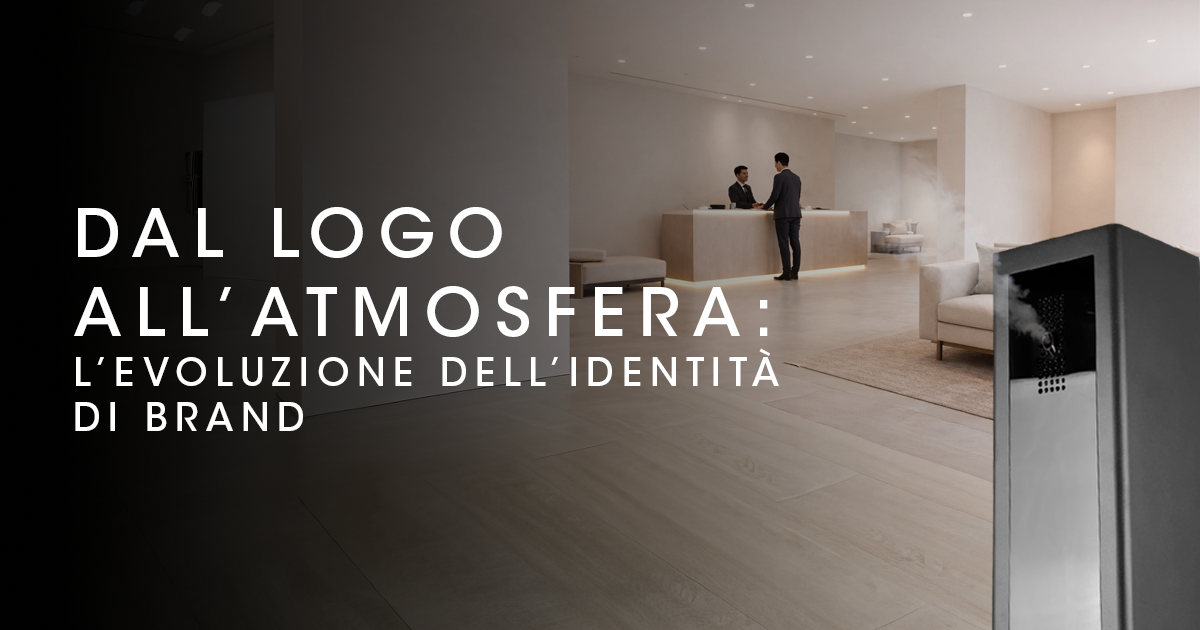
The logo is two-dimensional. The identity is not.
For decades, we have built brands starting from a mark.
A strong symbol, a coherent visual system, a recognizable graphic grammar.
Standing out used to be enough. Today, it is no longer sufficient.
In a market where almost every brand is visually polished, aesthetics have become a commodity. Homogeneity stems not from a lack of creativity, but from an excess of shared codes.
The real difference is no longer in the logo.
It is in the presence.
And presence is not just seen. It is felt.
Identity as a strategic experience
A brand does not compete only with other brands.
It competes with indifference.
In this scenario, visual recognition is a necessary condition, but not a sufficient one. What determines real positioning is the quality of the experience surrounding the mark.
In physical spaces, this transformation is evident. Architecture, design, and light build language. But it is the atmosphere that consolidates meaning.
The psychology of decision-making is clear: before rational comparison, there is an instinctive evaluation. It is in that moment that the perception of solidity, reliability, and coherence is formed.
A brand that occupies only the visual dimension governs the surface.
A brand that designs the atmosphere governs the depth.
And it is in the depth that lasting competitive advantage is built.
When identity becomes environment
The evolution from logo to atmosphere is not an aesthetic trend. It is a step toward strategic maturity.
In the hospitality sector, the strongest brands are not those that strike, but those that accompany. Perceptual continuity throughout the guest's journey builds recognition over time.
In premium retail, the space must not just attract. It must retain. When visual identity and atmosphere dialogue, the experience becomes more coherent and less replicable.
In corporate environments, identity is not a brand manual. It is perceived culture. The quality of the environment influences trust and the perception of leadership.
Finally, in wellness, the atmosphere does not support the experience: it structures it. It is an integral part of the promise.
In all these contexts, a strategic truth emerges:
-
visuals can be imitated
-
a coherent atmosphere is harder to replicate
-
memory is a more stable asset than visibility
The logo distinguishes.
The atmosphere consolidates.
Visibility generates attention.
Presence generates relationship.
From visibility to leadership
At Triad Aroma, we observe how the most forward-thinking companies do not limit themselves to asking how they should appear. They ask how they should be perceived.
Integrating atmosphere into the construction of identity means taking on a broader responsibility: designing not just the image, but the overall experience.
In a market saturated with signs, leadership belongs to those who succeed in transforming identity into presence.
When a brand ceases to be just a symbol and becomes an environment, it crosses the threshold of visibility.
It enters memory.
And what enters memory becomes value.


